BRAINBLOOM PULSE
A wellbeing platform that helps schools understand how students feel, and act early when a class needs support.
- Client
- Tspeaksnyc
- Platform
- Web app
- Services
- Product design
Web app
Dashboards - Stack
- React
NestJS
Prisma
PostgreSQL
Overview
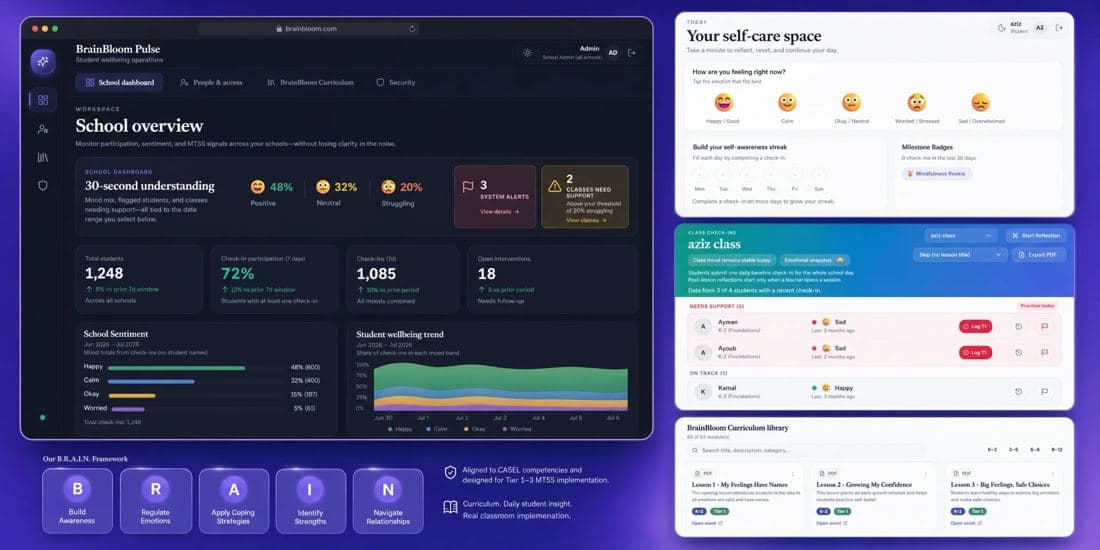
TSpeaksNYC Pulse is a K-12 Social-Emotional Learning (SEL) and student wellbeing platform that helps schools and districts understand how students are actually feeling — and act on it early. Students do a quick daily emotional check-in (a mood plus what's driving it); teachers see their classroom's emotional pulse in real time, flag students who need support, and run structured post-lesson reflections to measure whether an SEL lesson actually helped; and school and district leaders get privacy-safe, aggregated dashboards, benchmarking and exportable reports. The whole system is a closed loop: students share → teachers respond → leaders measure impact → support escalates through MTSS-style tiers when concern signals persist. Four roles — Student, Teacher, School Admin and District Admin — each get a tailored dashboard, all behind role-based access guards.
The problem
Schools had no simple way to see how students feel across classes. Teachers could not spot who needed help without reading every check-in, and leaders could not tell whether a social-emotional lesson actually helped.
Approach
- Make the student check-in quick and safe: one mood, what is driving it, and an optional private note for the counselor.
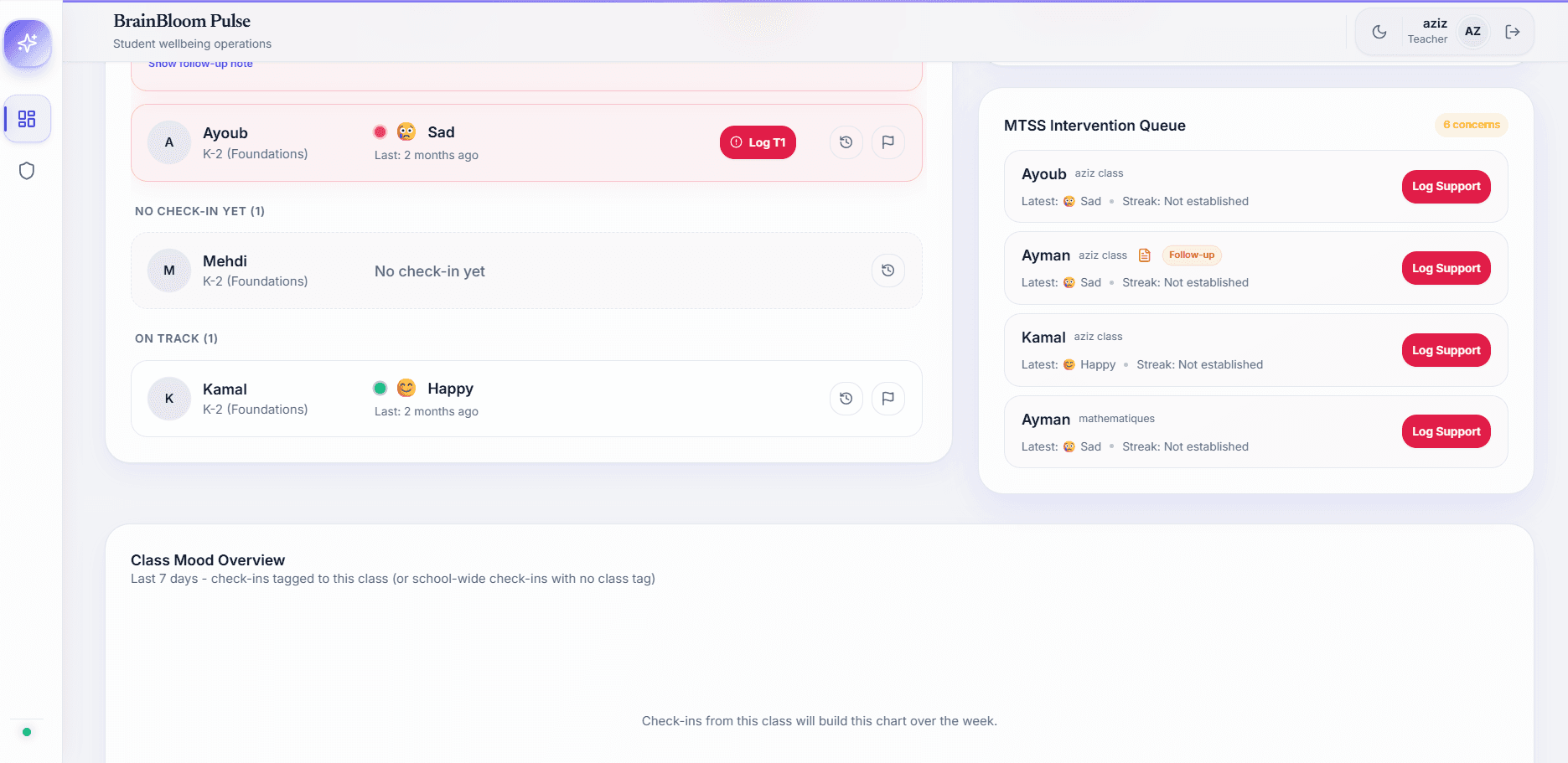
- Give teachers a live class pulse that sorts students into needs support, no check-in yet and on track, so help goes to the right student the same day.
- Close the loop with post-lesson reflections that compare mood before and after a lesson, so impact is measured instead of assumed.
- Keep leadership views aggregated: no student names in school or district dashboards, and tiered support escalation that mirrors how schools already work.
Architecture
- Four roles (student, teacher, school admin, district admin), each with its own dashboard behind role-based access guards on every endpoint.
- Backend: NestJS with Prisma on PostgreSQL.
- Front end: React.
- Exports: CSV for reflections and reports.
What we built
- School dashboard with mood mix, alerts and classes that need support
- Daily student check-ins with streaks and milestone badges
- Class view that ranks students who need support first
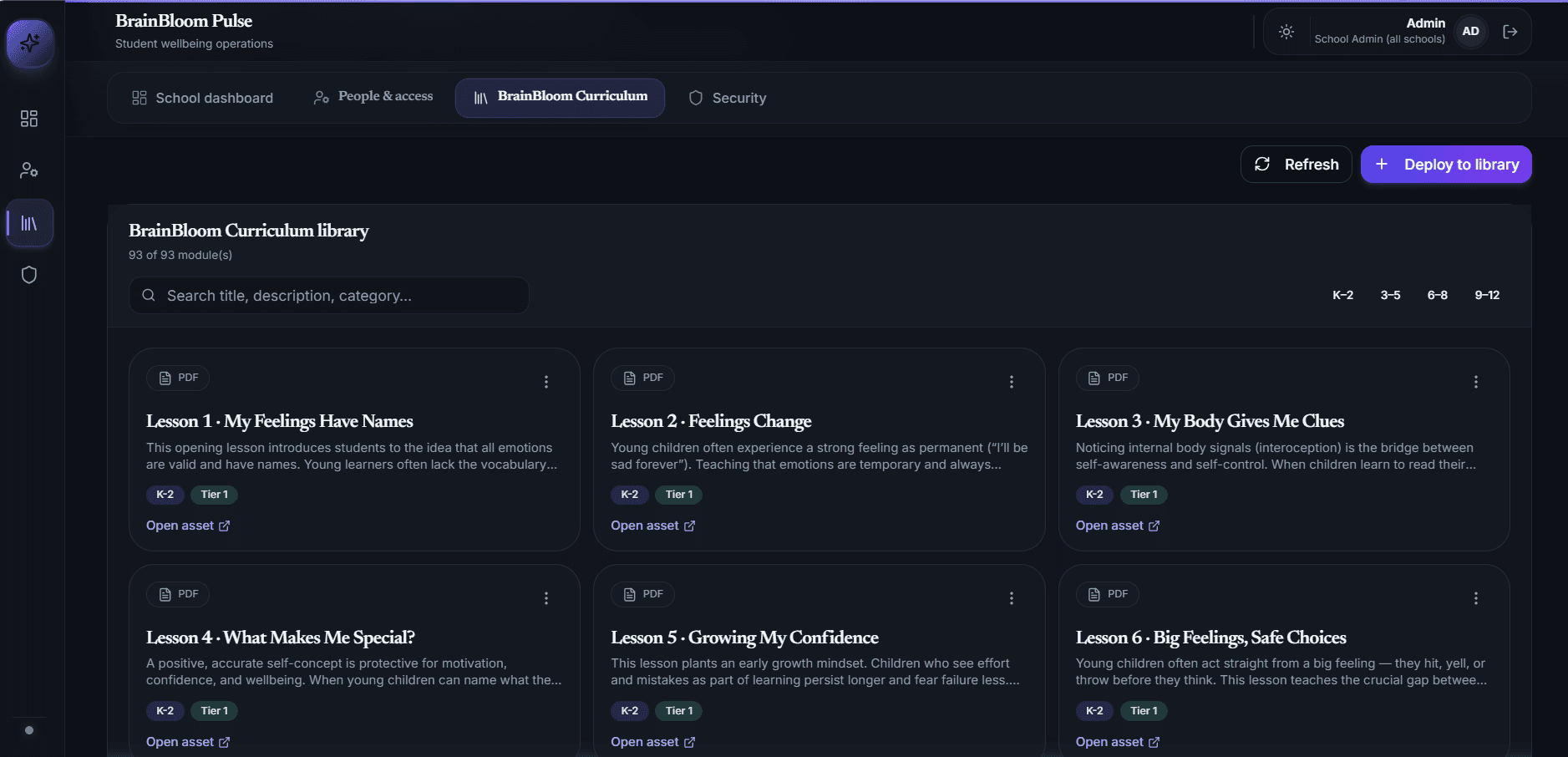
- Curriculum library with lessons filtered by grade
The daily check-in
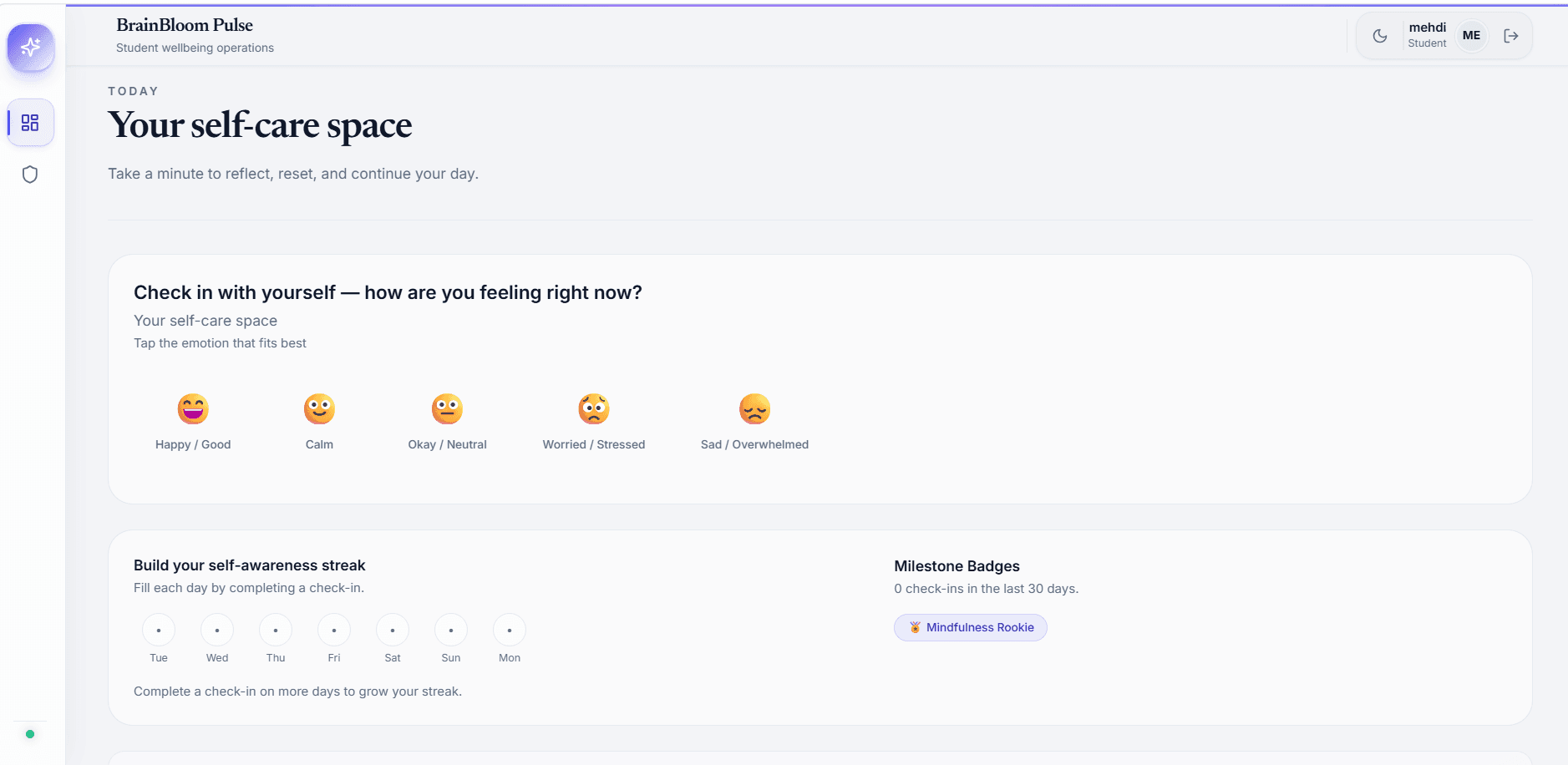
The student experience is built to feel safe, quick and encouraging — not clinical. A student taps a mood (Happy, Calm, Okay, Worried, Sad, Frustrated), picks what's affecting it (school, tests, friends, home, sleep, stress, health…) and can leave a private note for their counselor — one baseline check-in per school day. After a difficult mood, the app offers a short grounding exercise (box breathing, a 5-4-3-2-1 sensory reset) instead of just recording sadness, and a weekly self-awareness streak with milestone badges turns honest reflection into a healthy habit. Every response is clearly marked as shared only with trusted school support staff.
The teacher's class pulse
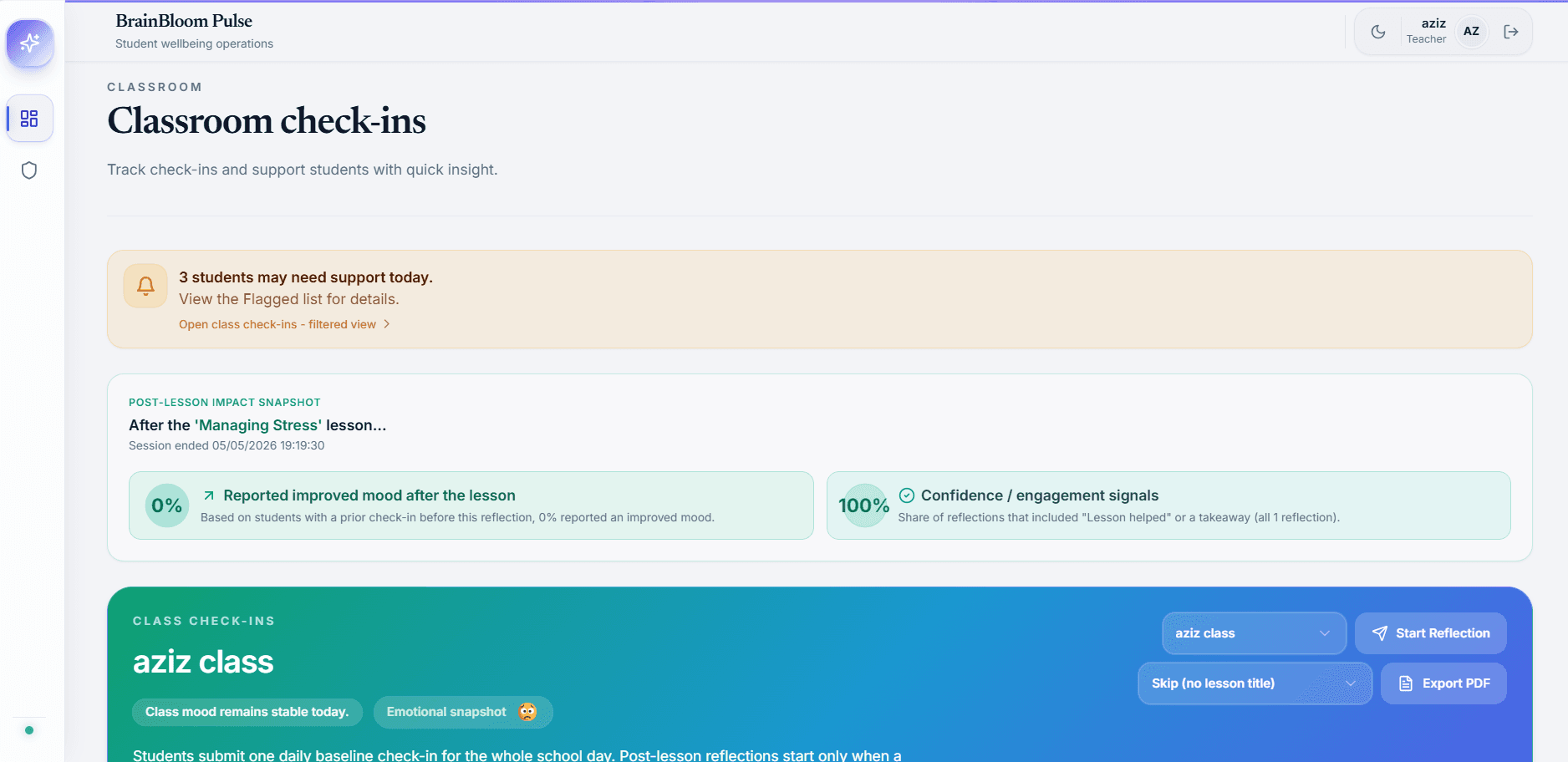
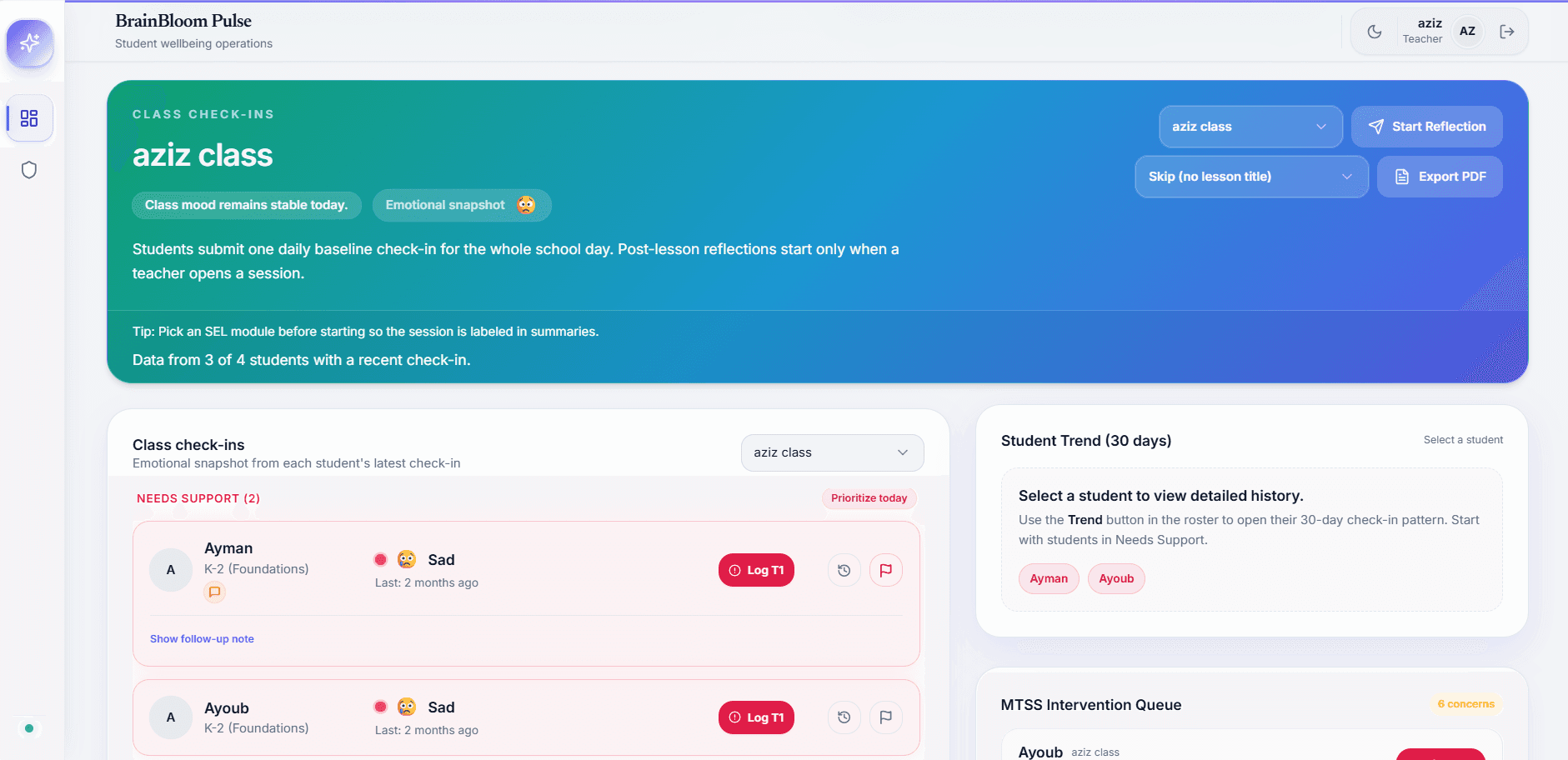
Teachers get a live command center for their classroom's emotional health. A Class Pulse roster sorts every student into Needs Support, No Check-in Yet or On Track — each with their latest mood, recency and a class mood average — while a proactive "students who may need support today" banner surfaces at-risk students (difficult-mood streaks or stale check-ins) behind a one-click filtered view. Teachers can flag a student with a note, open a formal Tier 1 intervention and escalate to Tier 2 (Tier 3 needs admin approval), with interventions visible across classes so support follows the student. A 30-day history drills into any student's mood trajectory.
Measured impact, not just data
The reflection loop is what makes the platform more than a mood tracker. A teacher launches a timed post-lesson reflection tied to a specific SEL lesson, and sees in near real-time the percentage of students who felt better afterward — with a full impact summary (improved / no change / worsened, mood drivers, notes) and CSV export. Because it pairs a before-and-after mood comparison, it actually quantifies whether a lesson changed how students feel. Teachers also browse and open district-published SEL lessons from an in-app curriculum library and export a teacher summary PDF.
School & district leadership analytics
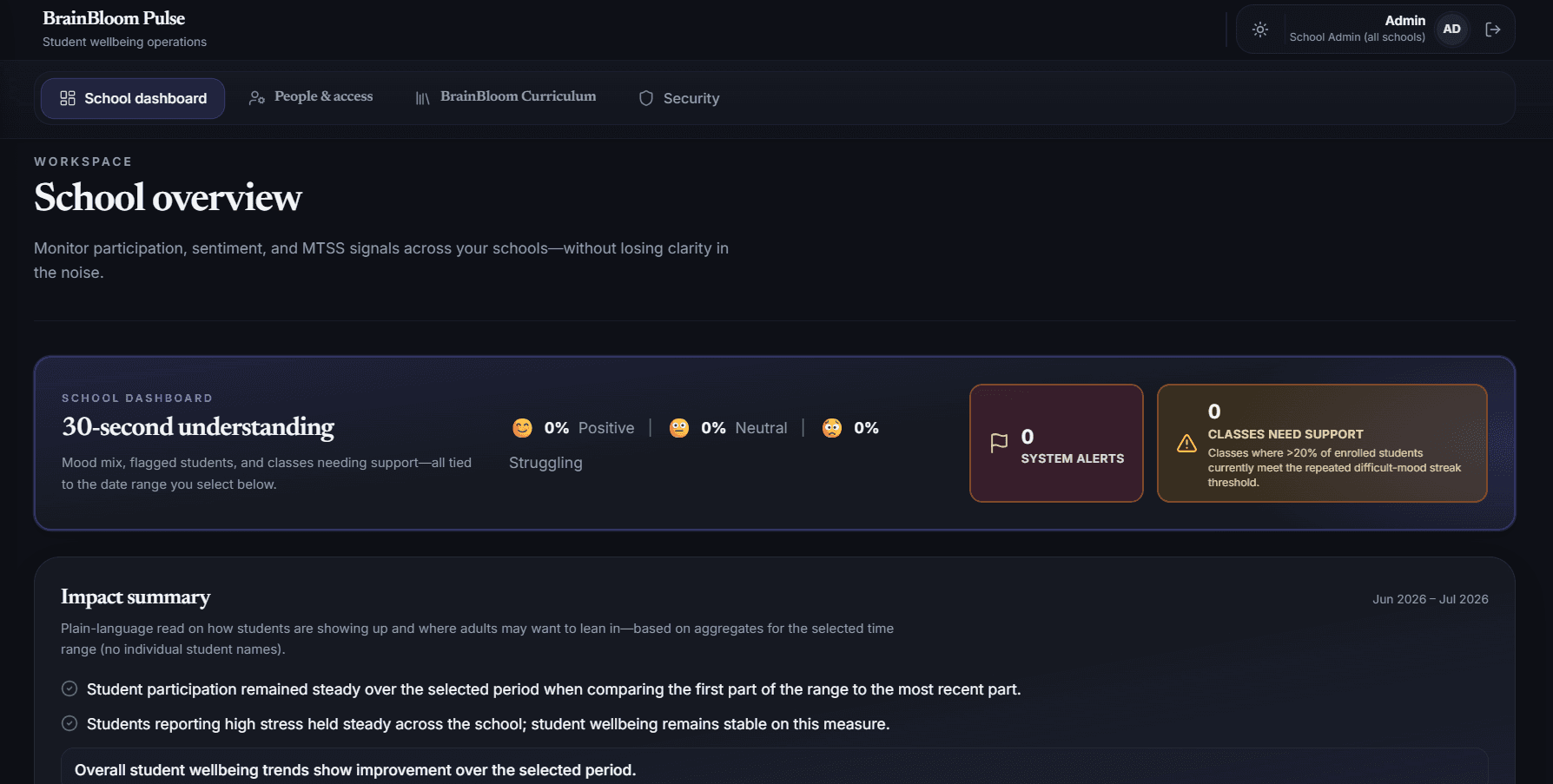
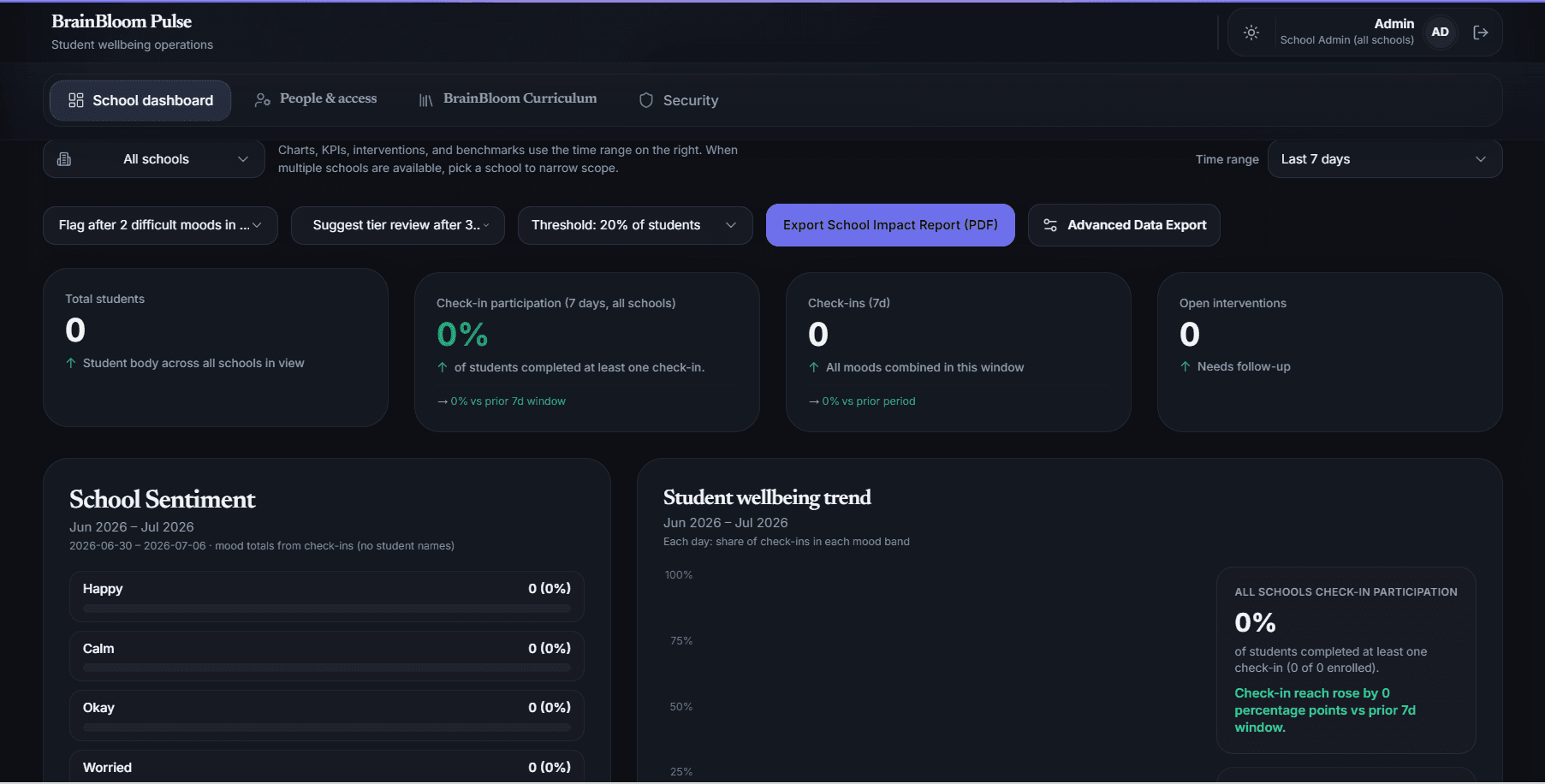
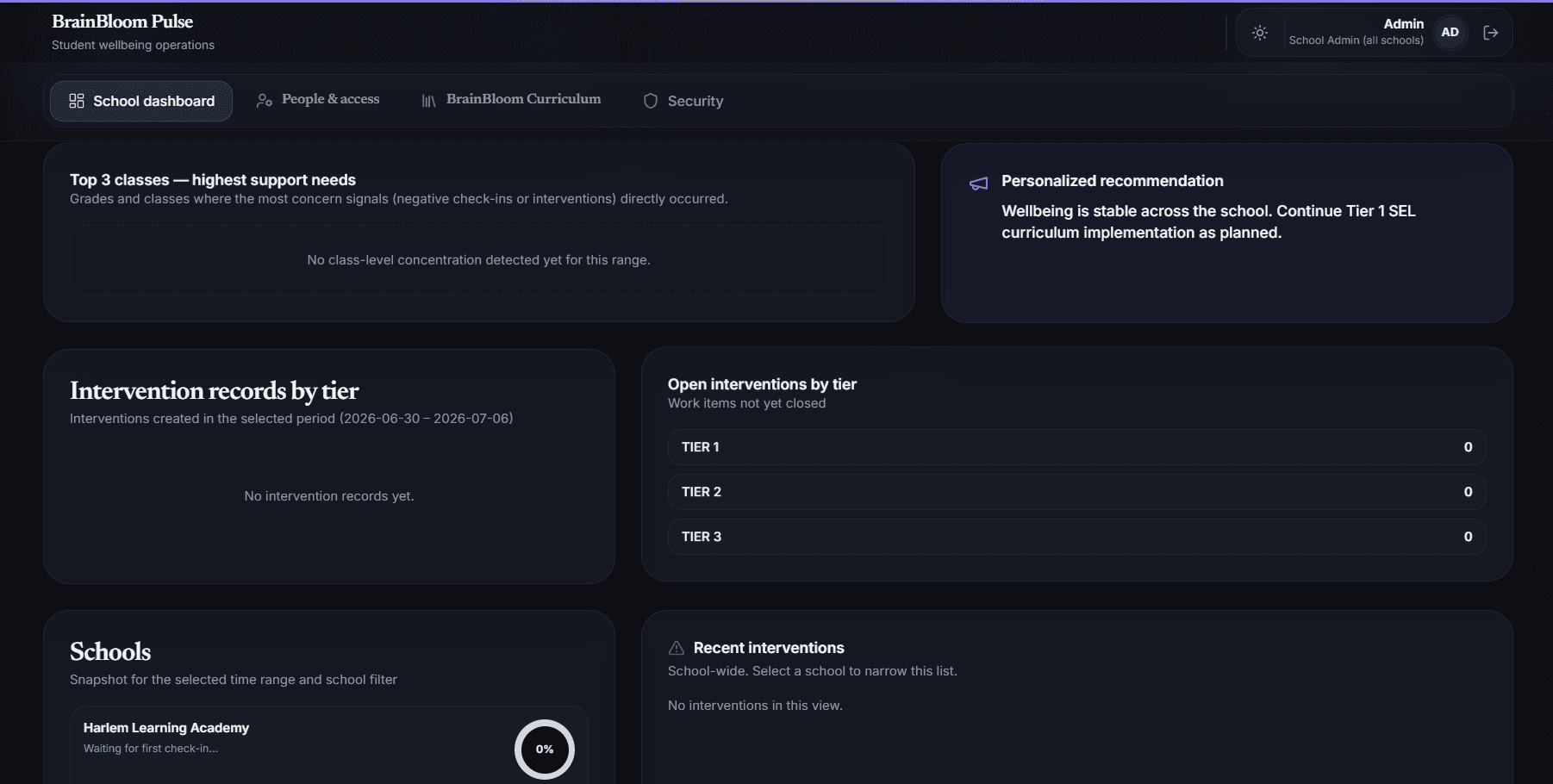
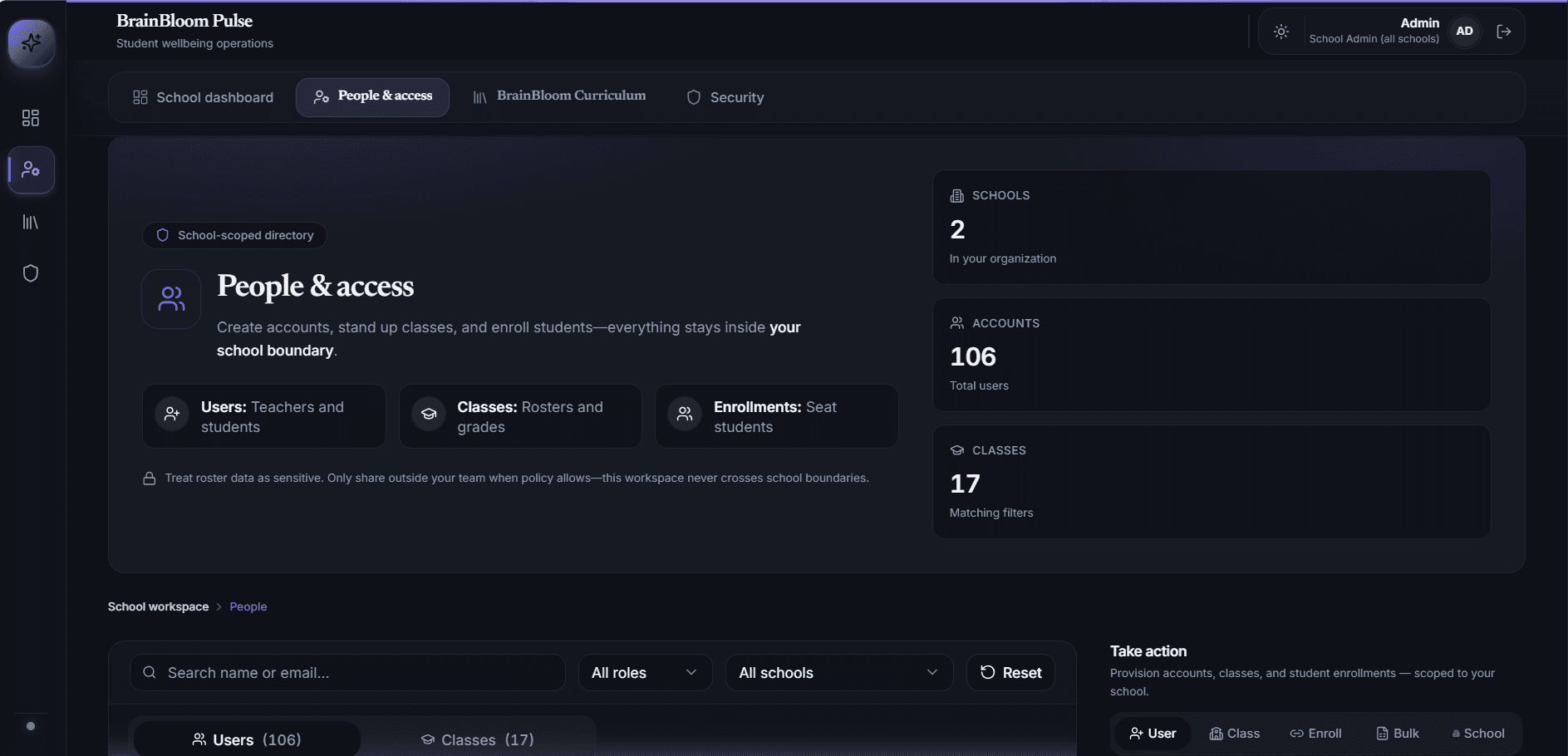
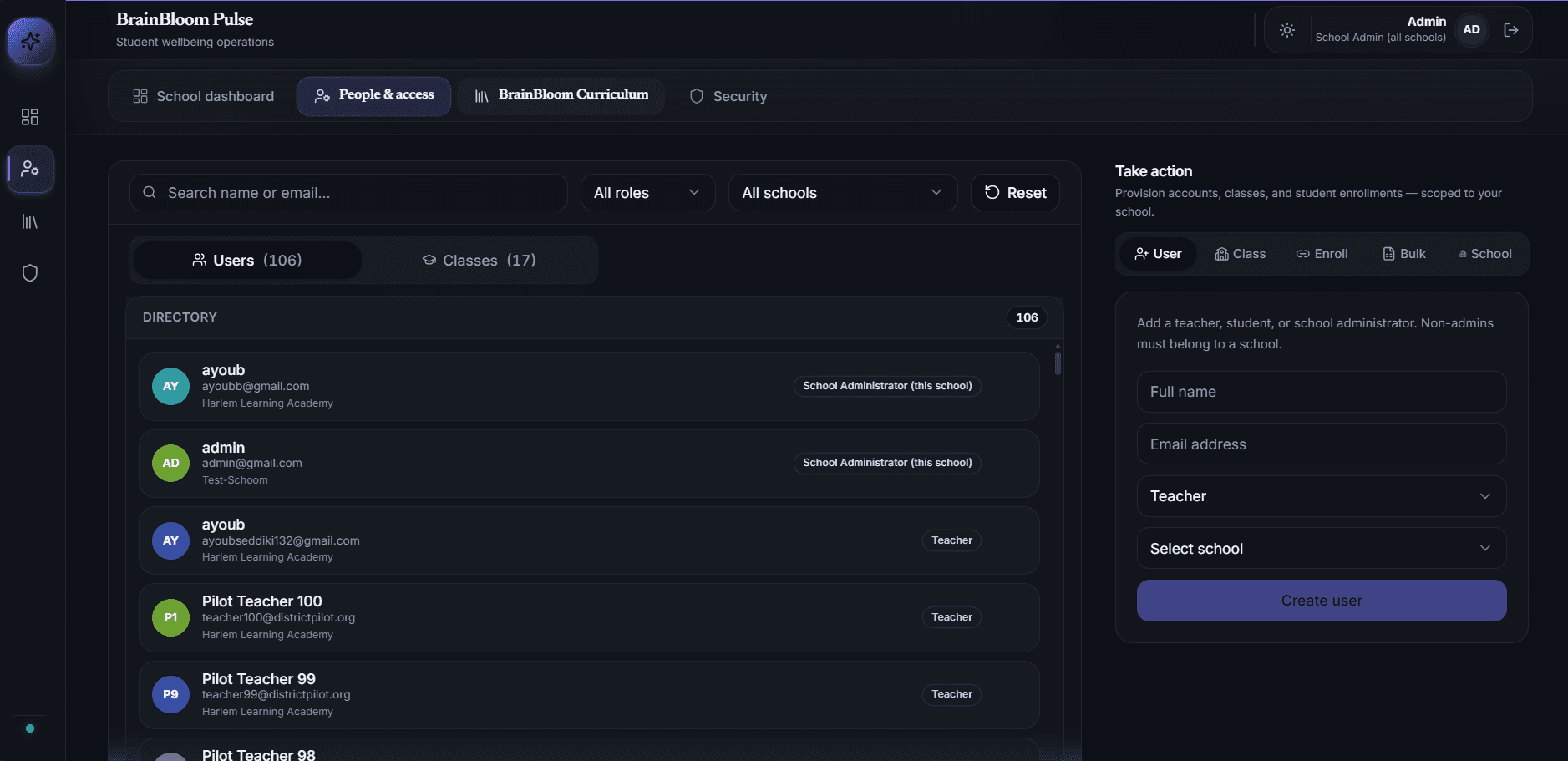
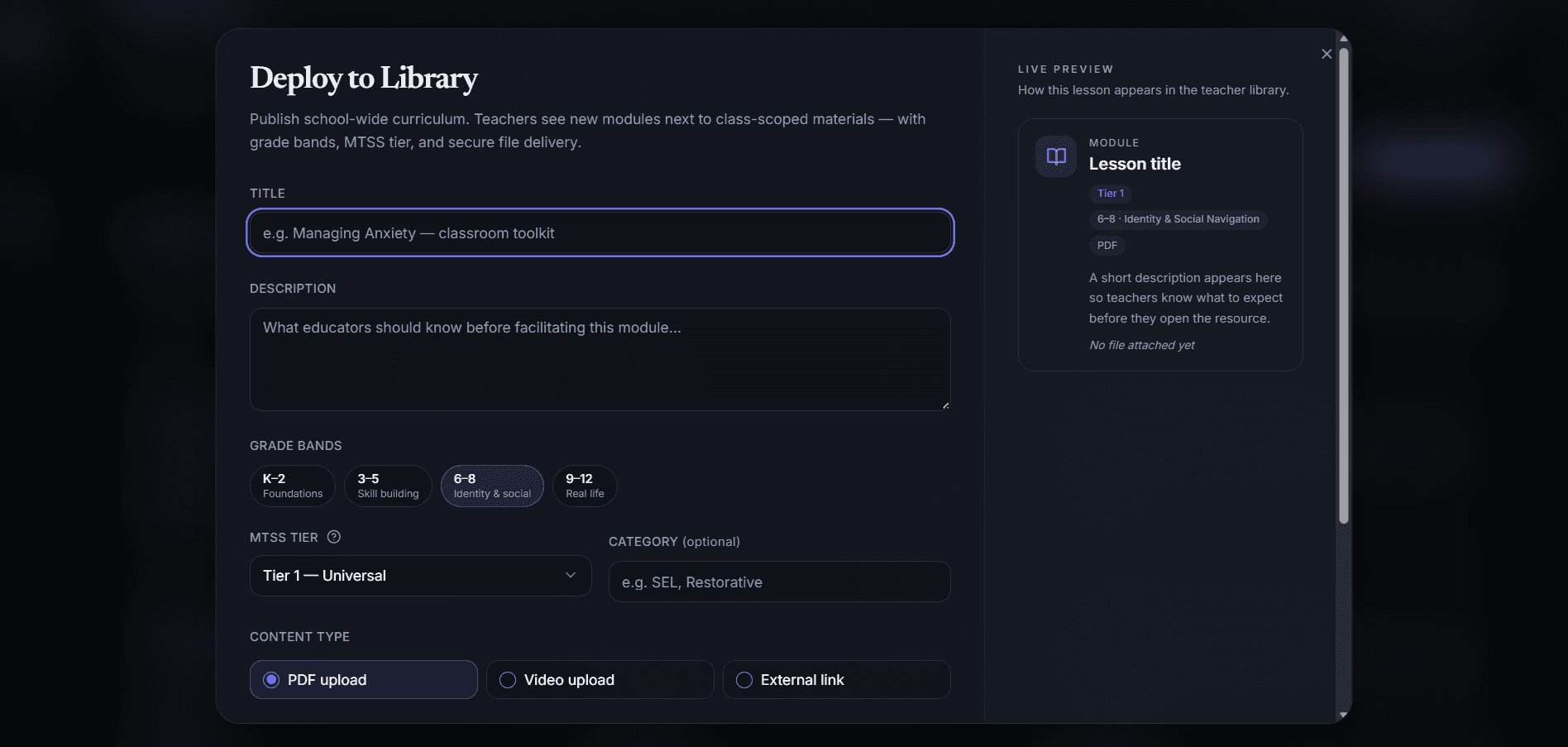
Leaders get a 30-second read and the depth to back it up. A School Admin sees the mood mix (Positive / Neutral / Struggling), flagged students and classes needing support across any date range (7/30/90 days, full school year or custom), plus KPIs — participation rate, total check-ins, open interventions and wellbeing trends with period-over-period comparisons — and per-class benchmarking with configurable thresholds. District Admins get the same across every school: a district-wide rollup with a school selector, side-by-side school intel cards, cross-school benchmarking, school creation and Tier 3 escalation authority. People and access management (bulk CSV onboarding, password resets, deactivation that preserves history) and curriculum publishing round out the admin tooling.
Privacy by design, production-grade backend
Leader-facing dashboards are strictly aggregated — no student names appear in school or district sentiment views, and student notes flow only to support staff. The MTSS-aligned Tier 1→2→3 escalation model mirrors how real schools structure interventions, with authority role-gated at each level. Under the hood: a NestJS + Prisma REST API with JWT auth, role-based access guards on every endpoint, forced initial-password-change and reset flows, request throttling on check-ins, file storage and CSV/PDF reporting pipelines — the kind of guarantees a district needs before it trusts a platform with how its students feel.
Related
Now booking new projects
One 30-minute call. You get a plan, a timeline and a fixed quote within 12 hours.
Book a free call→